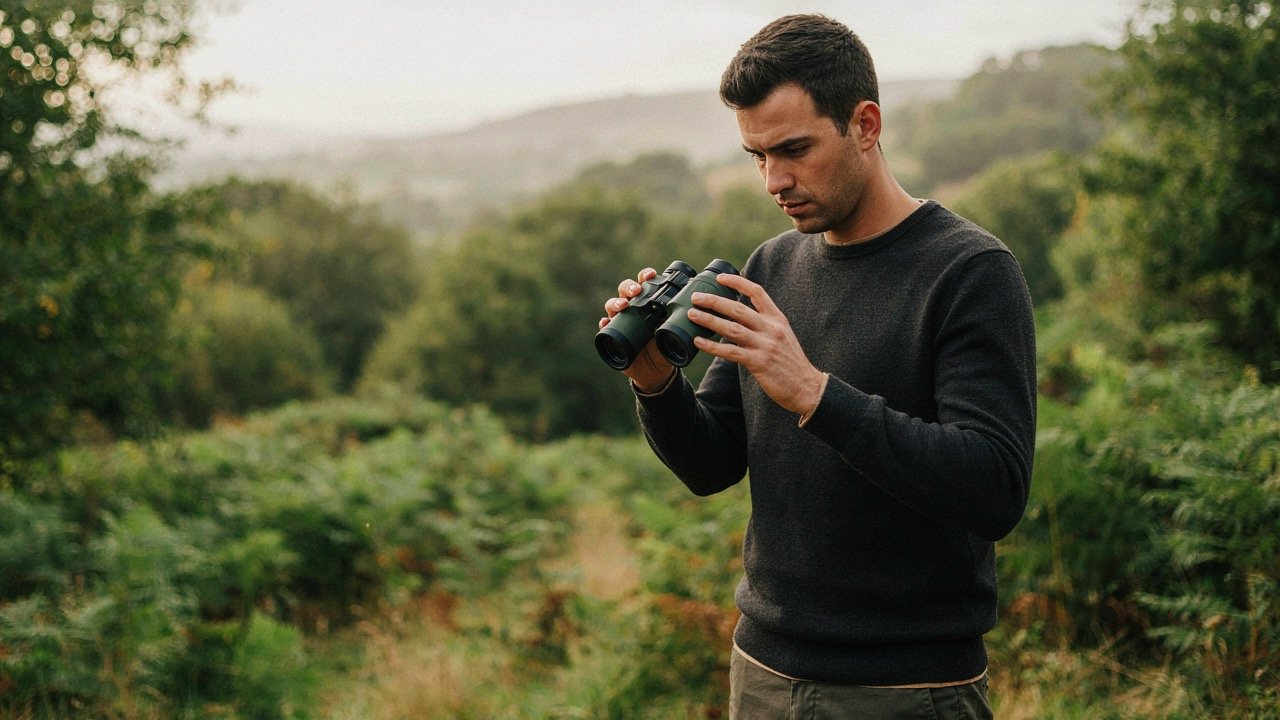

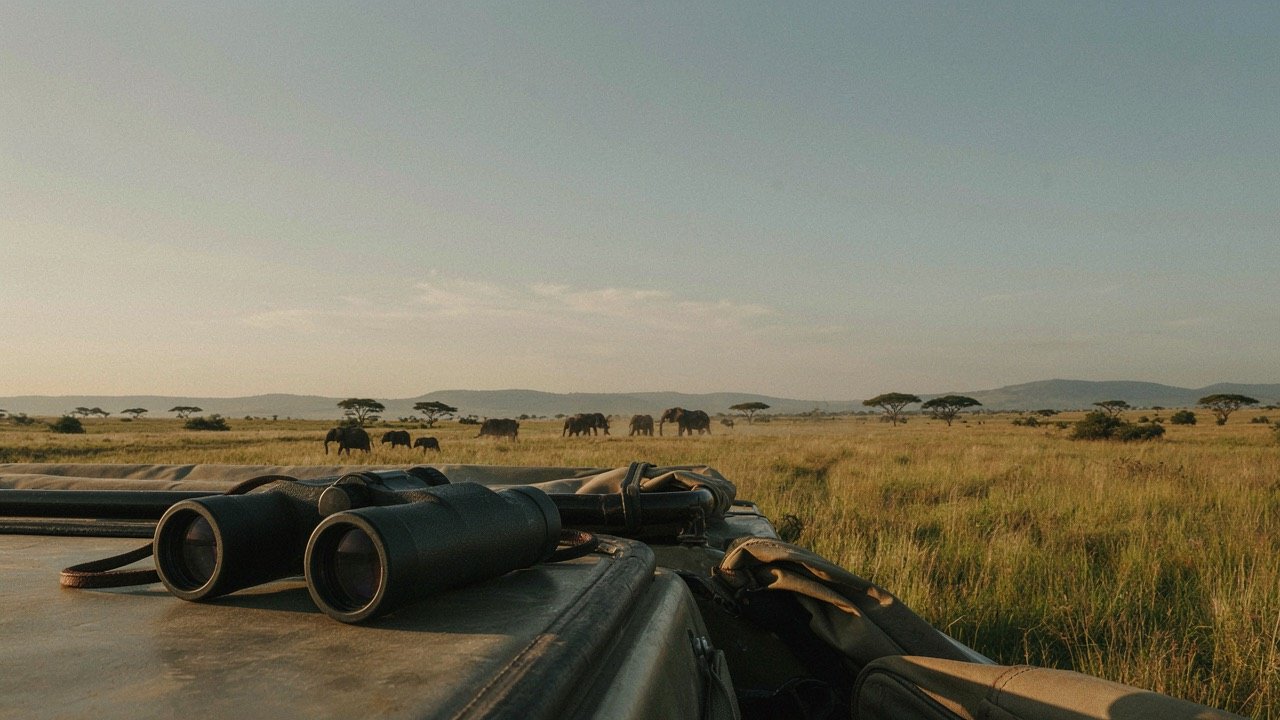
On safari, the animals rarely wait. A leopard steps out of a lugga, a martial eagle lifts off a dead branch, a herd of elephants moves across the far side of a plain. Good binoculars turn those moments from a distant shape into something you remember for the rest of your life. Here is how to choose a pair that works in the field, not just on a shop shelf.
Start with magnification: 8× is the safari sweet spot
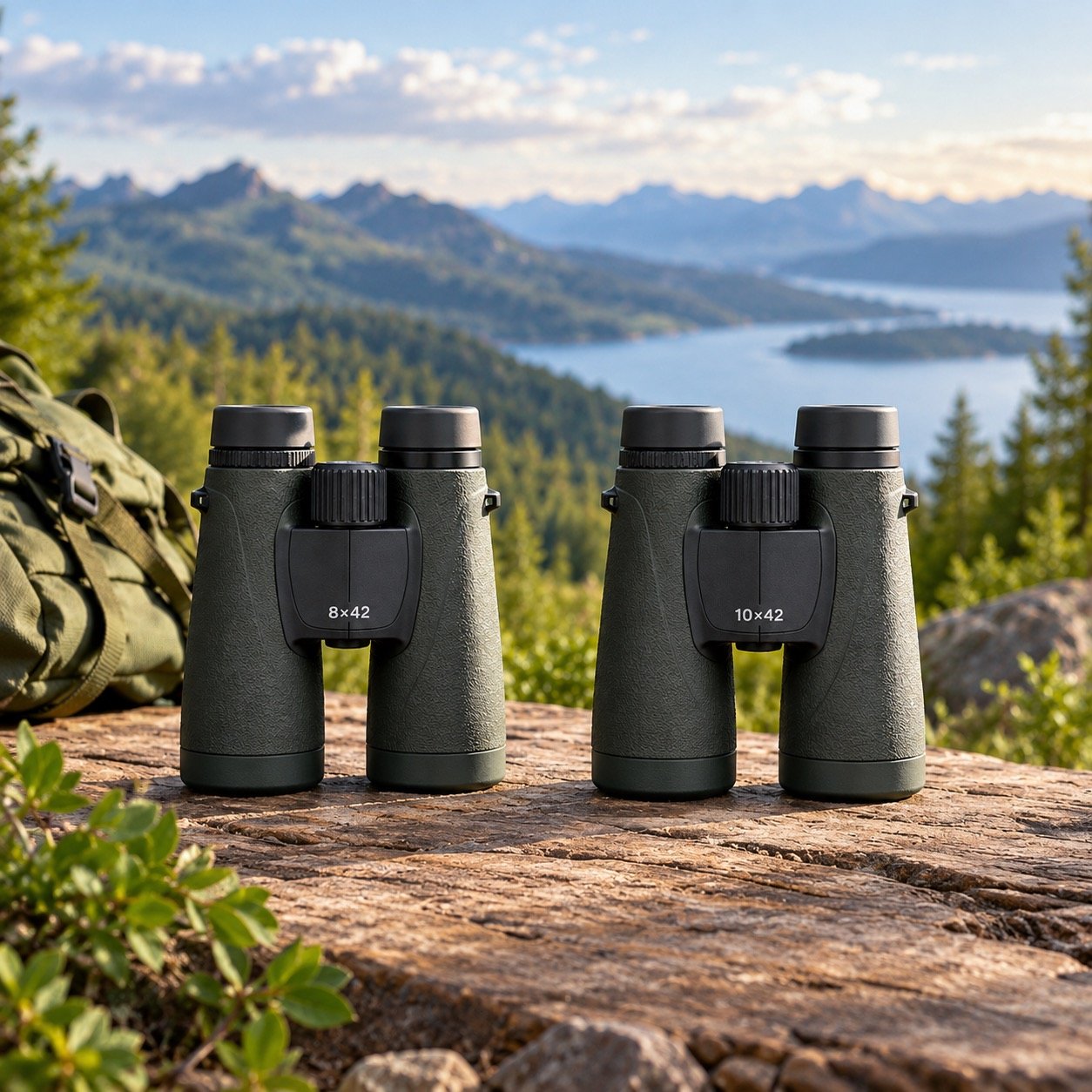
The first number in a binocular’s name is its magnification. An 8× binocular makes an animal look eight times closer. It is tempting to think more is always better, but higher magnification also magnifies every movement of your hands and narrows what you can see.
For most safari viewing, 8× is the most forgiving choice. It is steady in the hand, easy to aim from a moving or rocking vehicle, and wide enough to find a bird in a tree quickly. A 10× binocular shows more detail at long distances, and suits travellers who spend a lot of time scanning open plains and can brace against a window frame or beanbag.
Look at the objective lens: 42 mm is the all-rounder
The second number is the diameter of the front (objective) lenses in millimetres. Larger lenses gather more light, which matters most at dawn and dusk, when many animals are at their most active. A 42 mm objective is the classic balance between a bright image and a size you can carry all day. Compact 25–32 mm binoculars are lighter but noticeably dimmer in low light; 50 mm models are brighter still but heavier.
Field of view: how much of the scene you can see
Field of view is the width of the scene you see, usually quoted in metres at a distance of 1,000 metres. A wider field makes it easier to find an animal, follow a running cheetah or keep a flock of birds in view. When comparing two binoculars with the same magnification, the one with the wider field of view will generally feel more immersive and easier to use.
Weight matters more than you think
You may carry your binoculars for ten hours a day: on early drives, on walking safaris and on the lodge deck at sundowner time. A pair that feels fine in the shop can become tiring by day three. Hold them up to your eyes for a full minute before you decide. A comfortable strap and a balanced body make a real difference.
Weatherproofing and dust
East African safaris bring dust in the dry season and sudden downpours in the rains. A fully waterproof binocular is sealed against moisture, which also helps keep dust out of the optics. Ask whether a model is fully waterproof rather than simply “water resistant”.
Glass and coatings: where the image quality comes from
Two binoculars with the same numbers can look very different. Premium glass such as ED (extra-low dispersion) glass reduces colour fringing around high-contrast edges, like a dark bird against a bright sky. Coatings on the lenses and prisms increase brightness and contrast. If you plan to watch birds closely or spend a lot of time out in low light, it is worth investing in better glass.
Try them the way you will use them
- Adjust the hinge until you see one clear circle.
- Focus on something far away, then something close, and notice how easily the focus wheel turns.
- If you wear glasses, twist the eyecups down and check you can still see the full image.
- Look at a bright edge, such as a roofline against the sky, and check for colour fringing.
Our two safari companions
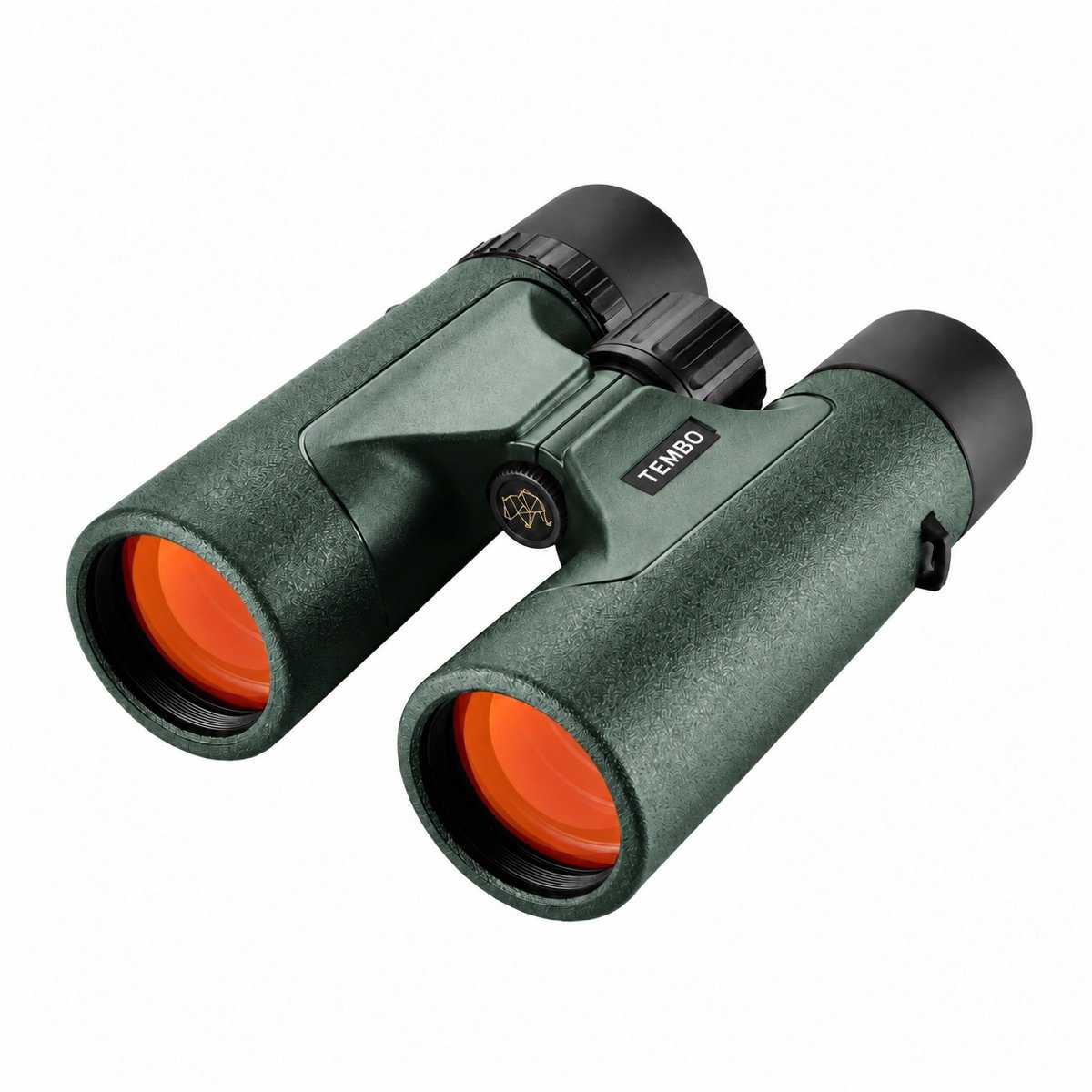
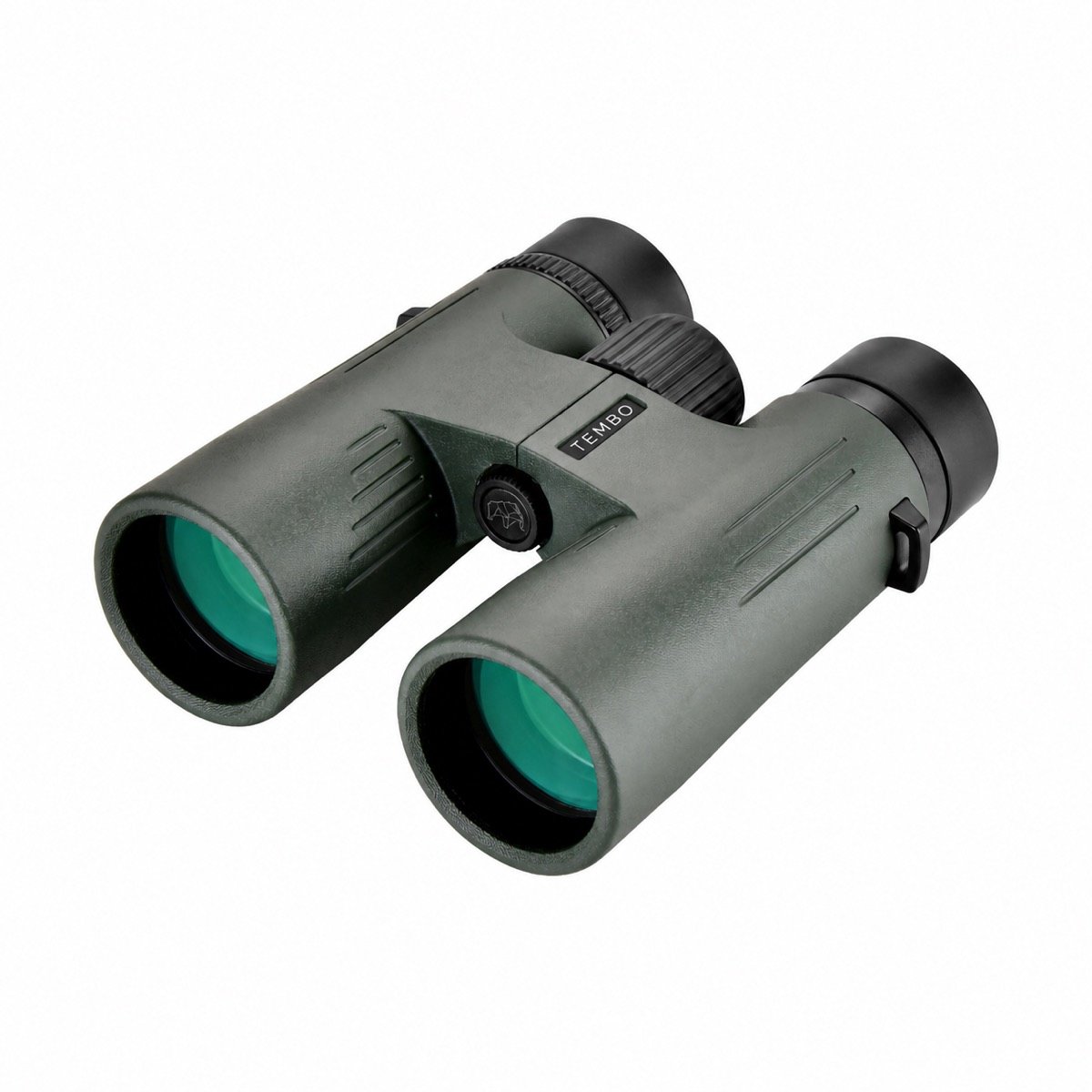
Both Tembo models are 8×42, the classic safari configuration. The Tembo Explorer is light at 546 g with a 123 m field of view, which makes it an easy companion for first safaris and long walks. The Tembo Pro adds premium ED glass, phase-coated optics and a 142 m field of view for travellers who want the brightest, sharpest view from first light to last.